Diagnose you tree
This page helps you identify and understand problems with your trees. From leaf discoloration and pest damage to root or structural issues, I provide guidance on how to recognize symptoms and what steps to take next. The goal is to give you clear, practical information and sustainable solutions to keep your trees healthy and safe.


Deadwood
Deadwood is the dead or dying wood in a tree that no longer carries nutrients. Over time, it becomes brittle and can break off at any moment — in the worst case, falling and injuring people or damaging property.
Storm damage
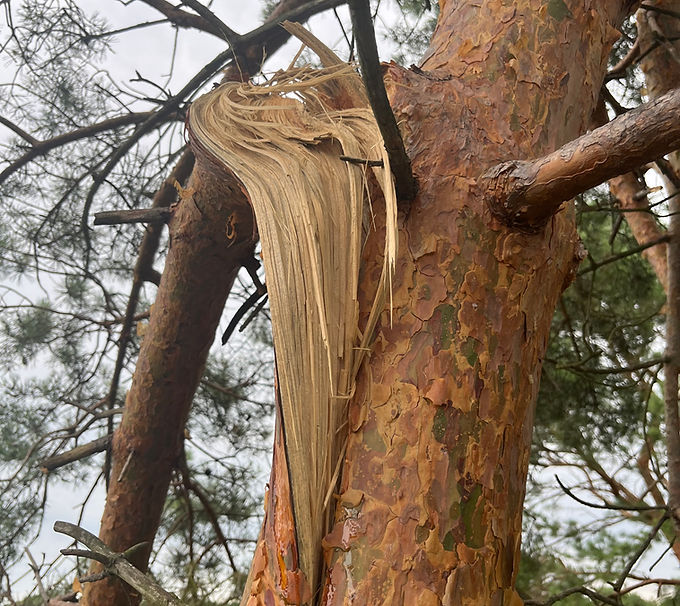
Storm damage occurs when heavy wind, rain, or snow breaks branches or splits parts of a tree. This can leave cracks, hanging limbs, or weakened structures that may fail later — posing a risk of falling branches and injury if not properly assessed and pruned.

Musroom infection
Mushrooms on a tree often signal internal decay or rot. While not every fungus is fatal, it usually means the damage is already advanced — often too late for full recovery. The tree should be professionally inspected to assess stability and safety.

Boaring insects
Boring insects tunnel into the wood or bark of a tree, disrupting the flow of water and nutrients. Early signs include small holes, sawdust, or peeling bark. Once inside, they weaken the structure from within — and by the time symptoms appear, significant internal damage is often already done.

Processionary caterpillars
⚠️ Warning: Never touch or disturb the nests or caterpillars of the oak processionary moth.
These caterpillars carry tiny toxic hairs that can cause severe skin irritation, allergic reactions, and respiratory problems in humans and animals. Their nests are often found on oak trunks or branches and should only be handled by trained professionals using protective equipment.

Dead trees
⚠️ Warning: Dead trees can be extremely dangerous and unstable.
Once a tree has completely died, its wood begins to dry and weaken, making it unpredictable — large branches or even the entire trunk can collapse without warning. Dead trees should always be assessed and removed by qualified professionals to prevent accidents or property damage.